"Europeans Are Good Global Citizens" False.
"On occasion, the maintenance of global order requires a willingness to use military power, which in turn requires a prior investment in military hardware...The entire EU spends about hal fas much on defense as the United States. That's just as well because, when it comes to projecting force, the task can be left to those deplorable, unilateralist, gun-toting Americans. As a rule, they will come to the rescue."
Comments?
Friday, June 29, 2007

Thursday, June 28, 2007

Thursday, May 3, 2007
Presidential Debates
I'm disappointed to have missed the first round of Presidential debates with the Democratic candidates. And as I searched online for a video clip, I discovered video clips were unavailable...apparently a move by MSNBC to retain rights to the broadcast. Like many bloggers, I think this is a load of crap and that voters should be able to access primary resources like presidential debates on the internet. I had to rely on the media analysis of the debates; my weapon of choice was the ever popular Daily Show. Hell if I was going to read through the transcript but I guess I have no choice if I want the raw data...
The second round, however, is tonight featuring Republican candidates. The Ronald Reagan Library as the choosen venue is certainly powerful...a call for Republicans to revert their party to its previous glory and popularity, something that has been utterly destroyed in the six years of the Bush Administration.
The second round, however, is tonight featuring Republican candidates. The Ronald Reagan Library as the choosen venue is certainly powerful...a call for Republicans to revert their party to its previous glory and popularity, something that has been utterly destroyed in the six years of the Bush Administration.
Monday, April 30, 2007
Learning From the Past: Cultural Imperialism and the West
Although Western imperialism was on the decline in the late 18th century, Europe and the
The beautiful
Through the 19th century,
The disintegration of the Ottoman Empire was a slower and less direct process than the overthrow of the
The effect of the United States, Britain and France exercising their power on Hawaii and the Middle East had not only political and economic implications but more importantly, cultural implications on the colonized peoples. The long term effects of cultural imperialism, when the weaker state adopts the language, manners and lifestyle of the stronger state, has undermined the Hawaiian and Arab minorities. In the hundred plus years since the Hawaiian overthrow and Ottoman partition, evidence of the cultural impact of the West has manifested itself. The lesson we learn from such case studies is that cultural identity, a set of characteristics inherent in certain societies and cultures that individuals within those cultures choose to identify with, are essential to the survival of a people. Colonized people struggle to survive when cultural imperialism forces a loss of cultural identity.
Thankfully, cultural imperialism is not irreversible. The resurgence of Hawaiian culture in
There are three interdependent factors that limited the permanence of cultural imperialism in
When examining the fall of the
The lack of politically sensitive borders significantly hinders the possibility of political bodies that foster cultural awareness as evidenced in the nations of the
Without the culturally authentic borders and political bodies that uphold cultural identity, federal recognition of cultural identity or colonial apology are unattainable. In the
The mitigated disaster that
Monday, April 23, 2007
A New Years Resolution
The burden and stress of this semester has manifested itself into a no-holds barred freak out session that has lasted since the beginning of April. I am about to enter my last year of undergraduate study with no real plans after graduation.
The young man I'm seeing seems to think this means all I want to do is follow him, marry him and pop out a few of his kids. This is not the case but with no real plans of my own, I can see how he'd worry that he is holding me back. But from what? Not even I know. That's the problem.
When a problem roots itself in your school, professional and social life, it must be significant. I needed a change.
So I made a resolution to immerse myself in something that matters to me. I'm starting small...I picked up Foreign Policy and The Economist today and have decided to invest in a subscription. Thumbing through the pages reading about the world's problems not only makes my own seem miniscule but also encourages me to work towards solving those meaningful and substantial issues.
I'd like to keep this up. Maybe I'll even spend some of my day in silence reflecting on things like The Colonic. Whatever the case, I hope this little change can help make bigger ones...
The young man I'm seeing seems to think this means all I want to do is follow him, marry him and pop out a few of his kids. This is not the case but with no real plans of my own, I can see how he'd worry that he is holding me back. But from what? Not even I know. That's the problem.
When a problem roots itself in your school, professional and social life, it must be significant. I needed a change.
So I made a resolution to immerse myself in something that matters to me. I'm starting small...I picked up Foreign Policy and The Economist today and have decided to invest in a subscription. Thumbing through the pages reading about the world's problems not only makes my own seem miniscule but also encourages me to work towards solving those meaningful and substantial issues.
I'd like to keep this up. Maybe I'll even spend some of my day in silence reflecting on things like The Colonic. Whatever the case, I hope this little change can help make bigger ones...
Sunday, April 22, 2007
Will the Real Foreign Diplomat Please Stand Up?
Condoleezza Rice has quietly discovered the difference between being a loyal, order-following Bushie and being loyal but maintaining personal character—something Alberto Gonzalez apparently hasn’t learned yet. As Speaker Nancy Pelosi flagrantly defies the Executive branch and attempts engagement with rogue nations, Rice is stretching her diplomatic wings in an attempt to engage diplomatically in the Middle East the right way.
Rice met with Palestinian Authority Finance Minister, Dr. Salaam Fayyad on Wednesday April 18. The Palestinian Authority is led by democratically-elected Hamas, whom the United States has refused to recognize. In doing so, she has showed U.S. commitment to the ending the Palestinian-Israeli conflict without compromising the U.S. stance on working with Hamas and other terrorist organizations and state sponsors.
 Rice’s commitment to the economic crisis of Palestine ensures stability and long-term benefits for Palestinians. Palestinians argue that their immediate need, a Palestinian state and a right of return for refugees into Israeli, are more urgent than economic stability. However, Rice realizes that in tackling smaller issues, chances of a settlement and concrete improvements are higher. With the trust and hope achieved with these initiatives, the involved parties will be more optimistic in discussing the more emotional and pressing issues.
Rice’s diplomatic efforts are not overly ambitious. Some, including both Palestinians and Israelis, say the efforts will yield nothing at all. But the fact is these talks have been in place for decades and cannot all be immediately fixed. The 34-Day War between Israel and Hezbollah in the summer of 2006 ensured any blossoming relations between Arabs and Israelis were cut short. Rice is realistically trying to recover that ground and hopefully gain more in the process. With Rice’s help, Israeli Prime Minister Ehud Olmert and Palestinian Authority President Mahmoud Abbas have agreed to biweekly talks, the second of which will take place in Jericho, the first ever negotiations in a Palestinian town.
Rice managed to dodge direct talks with members of Hamas by meeting Palestinian Finance Minster Fayyad, an independent. At the same time she is engaging in the unity party of Palestine. Though this political circumvention of Hamas cannot go on forever, for the time being Rice has maintained the U.S. policy of non-engagement with Hamas. Loyalty to the Bush Administration on this issue will give credibility to the Administration while softening hardliner objections and giving Rice more discretion in future negotiations.
Probably the biggest contrast to Speaker Nancy Pelosi’s trip to Syria, Secretary Rice has not turned her trips to the Middle East into a political debacle on display for the media. High-level meetings are not photo-ops or ceremonial dialogues, rather, closed-door negotiations. In fact her several visits in the past few month have been low key and generated relatively low buzz in the news.
 Sure Speaker Pelosi’s trip to Syria increased awareness of a possible U.S. approach of Syria-Iran in stabilizing neighbor Iraq. But the political ploy only sensationalized U.S.-Syrian relations and gave the Syrian government unnecessary legitimacy. By meeting with Syrian President Bashar al-Assad she insinuates a U.S. willingness to soften its diplomatic shunning of Syria, a state-sponsor of terror since 1979.
Pelosi had good intentions and perhaps we will be pleasantly surprised with the good her visit did to restoring diplomatic civility between the U.S. and Syria. But I’m not holding my breath.
The entire Pelosi-Syria visit, however, did gesture to the international community that the entire U.S. concurred with Bush Administration policies. Countries adamantly opposed to Bush’s foreign policy should be more open to relations because of this. Rice should take advantage of this, bite the bullet and attempt to work with all regional players, including Syria to stabilize the new Iraq regime. Choosing to exclude Iran, I can understand. But only working with Egypt, Jordan, Saudi Arabia and the UAE on the Arab-Israeli conflict only perpetuates the misconception that the United States has only its oil-greedy interests in mind.
Another significant gesture of U.S. commitment would be Rice convincing its ally Israel to give something in the negotiations. Not only does this demonstrate non-biased towards Israel, an accusation made time and again by Arab countries, it also encourages goodwill between Arab countries and the U.S. This would have positive implications in Iraq.
Unfortunately, Rice attempting to establish dialogue with Syria after the Pelosi visit may indicate Bush Administration vulnerability. But that’s nothing new. At this point this Administration has nothing to lose and a lot to gain from making a solid, no B.S. attempt at dialogue and constructive relationship building amongst all countries in the region. Secretary of State Rice is doing her best to make sure that happens.
Rice met with Palestinian Authority Finance Minister, Dr. Salaam Fayyad on Wednesday April 18. The Palestinian Authority is led by democratically-elected Hamas, whom the United States has refused to recognize. In doing so, she has showed U.S. commitment to the ending the Palestinian-Israeli conflict without compromising the U.S. stance on working with Hamas and other terrorist organizations and state sponsors.
Rice’s commitment to the economic crisis of Palestine ensures stability and long-term benefits for Palestinians. Palestinians argue that their immediate need, a Palestinian state and a right of return for refugees into Israeli, are more urgent than economic stability. However, Rice realizes that in tackling smaller issues, chances of a settlement and concrete improvements are higher. With the trust and hope achieved with these initiatives, the involved parties will be more optimistic in discussing the more emotional and pressing issues.Rice’s diplomatic efforts are not overly ambitious. Some, including both Palestinians and Israelis, say the efforts will yield nothing at all. But the fact is these talks have been in place for decades and cannot all be immediately fixed. The 34-Day War between Israel and Hezbollah in the summer of 2006 ensured any blossoming relations between Arabs and Israelis were cut short. Rice is realistically trying to recover that ground and hopefully gain more in the process. With Rice’s help, Israeli Prime Minister Ehud Olmert and Palestinian Authority President Mahmoud Abbas have agreed to biweekly talks, the second of which will take place in Jericho, the first ever negotiations in a Palestinian town.
Rice managed to dodge direct talks with members of Hamas by meeting Palestinian Finance Minster Fayyad, an independent. At the same time she is engaging in the unity party of Palestine. Though this political circumvention of Hamas cannot go on forever, for the time being Rice has maintained the U.S. policy of non-engagement with Hamas. Loyalty to the Bush Administration on this issue will give credibility to the Administration while softening hardliner objections and giving Rice more discretion in future negotiations.
Probably the biggest contrast to Speaker Nancy Pelosi’s trip to Syria, Secretary Rice has not turned her trips to the Middle East into a political debacle on display for the media. High-level meetings are not photo-ops or ceremonial dialogues, rather, closed-door negotiations. In fact her several visits in the past few month have been low key and generated relatively low buzz in the news.
Sure Speaker Pelosi’s trip to Syria increased awareness of a possible U.S. approach of Syria-Iran in stabilizing neighbor Iraq. But the political ploy only sensationalized U.S.-Syrian relations and gave the Syrian government unnecessary legitimacy. By meeting with Syrian President Bashar al-Assad she insinuates a U.S. willingness to soften its diplomatic shunning of Syria, a state-sponsor of terror since 1979.Pelosi had good intentions and perhaps we will be pleasantly surprised with the good her visit did to restoring diplomatic civility between the U.S. and Syria. But I’m not holding my breath.
The entire Pelosi-Syria visit, however, did gesture to the international community that the entire U.S. concurred with Bush Administration policies. Countries adamantly opposed to Bush’s foreign policy should be more open to relations because of this. Rice should take advantage of this, bite the bullet and attempt to work with all regional players, including Syria to stabilize the new Iraq regime. Choosing to exclude Iran, I can understand. But only working with Egypt, Jordan, Saudi Arabia and the UAE on the Arab-Israeli conflict only perpetuates the misconception that the United States has only its oil-greedy interests in mind.
Another significant gesture of U.S. commitment would be Rice convincing its ally Israel to give something in the negotiations. Not only does this demonstrate non-biased towards Israel, an accusation made time and again by Arab countries, it also encourages goodwill between Arab countries and the U.S. This would have positive implications in Iraq.
Unfortunately, Rice attempting to establish dialogue with Syria after the Pelosi visit may indicate Bush Administration vulnerability. But that’s nothing new. At this point this Administration has nothing to lose and a lot to gain from making a solid, no B.S. attempt at dialogue and constructive relationship building amongst all countries in the region. Secretary of State Rice is doing her best to make sure that happens.
Saturday, April 21, 2007
A Dangerous Duo
Never really thought of how dangerous an Iran-Syria coalition could be until you see it all inked out in one article...
Friday, April 20, 2007
Privitization of War
According to Jeremy Scahill, author of Blackwater: The Rise of the World's Most Powerful Mercenary Arm, 48,000 privately-contracted troops, aka "mercenaries" are currently serving in Iraq.
Blackwater USA is one of a hundred private companies who are contracted to do basic jobs, such as clean for our troops, to critical security initiatives, including protecting State Department officials and Iraqi officials.
Through such companies, President Bush has been able to persue an offensive program in Iraq without consent from Congress. These mercenaries are also not included in the casualt
Check out Jeremy Scahill on the Daily Show.
Blackwater USA is one of a hundred private companies who are contracted to do basic jobs, such as clean for our troops, to critical security initiatives, including protecting State Department officials and Iraqi officials.
Through such companies, President Bush has been able to persue an offensive program in Iraq without consent from Congress. These mercenaries are also not included in the casualt
Check out Jeremy Scahill on the Daily Show.
Thursday, April 19, 2007
Condi Rice Upping Diplomacy in Middle East
Great op-ed by David Ignatius discussing some of the diplomatic efforts of Secretary of State Condoleezza Rice in the Middle East. Very hopeful and optimistic about her diplomacy skills and getting the United States back on the positive side of the international community.
Gonzalez in the Hot Seat
Highlights from the NY Times article on Gonzalez's visit to the Senate today....
“I think anyone who’s watched this would say we could do better for attorney general,” Senator Charles Schumer (D), New York, said during a break. “He seems to be far less qualified than the U.S. attorneys that he’s fired.”
“I don’t believe that you’re involved in a conspiracy to fire somebody because they wouldn’t prosecute a particular enemy of a politician or a friend of a politician,” said Senator Lindsey Graham, Republican of South Carolina. “But at the end of the day, you said something that struck me: that sometimes it just came down to these were not the right people at the right time. If I applied that standard to you, what would you say?”
One word. Ouch.
Read the whole piece here
“I think anyone who’s watched this would say we could do better for attorney general,” Senator Charles Schumer (D), New York, said during a break. “He seems to be far less qualified than the U.S. attorneys that he’s fired.”
“I don’t believe that you’re involved in a conspiracy to fire somebody because they wouldn’t prosecute a particular enemy of a politician or a friend of a politician,” said Senator Lindsey Graham, Republican of South Carolina. “But at the end of the day, you said something that struck me: that sometimes it just came down to these were not the right people at the right time. If I applied that standard to you, what would you say?”
One word. Ouch.
Read the whole piece here
Tuesday, April 17, 2007
Finally, Some Success in Darfur
If you look at the State Department's list of State Sponsors of Terrorism, 4 of the 5 countries (Cuba, Iran, North Korea and Syria) are clearly ideological and political foes of the United States. And then there is Sudan, placed on the list more than 10 years ago.
Why only now are UN troops finally gaining access to Darfur by the Sudanese government? It seems other foreign policies engaged by the Bush Administration (ie Iraq, Afghanistan) have detracted our resources, legislative effort and domestic political opinion from the genocide in Darfur.
Thankfully, the U.S. through the UN was able to put political pressure on the Sudanese government. This is an achievement that should give both disheartened American citizens international community some faith in international organizations and their success.
Why only now are UN troops finally gaining access to Darfur by the Sudanese government? It seems other foreign policies engaged by the Bush Administration (ie Iraq, Afghanistan) have detracted our resources, legislative effort and domestic political opinion from the genocide in Darfur.
Thankfully, the U.S. through the UN was able to put political pressure on the Sudanese government. This is an achievement that should give both disheartened American citizens international community some faith in international organizations and their success.
Monday, April 16, 2007
Political Strength Key to Iraqi Stability
There’s a catch-22 in the Iraqi cabinet. While six Shiite cabinet members have resigned in an attempt to put political pressure on Prime Minister Maliki, their actions will destabilize the Iraqi political body. Doing so will only emphasize the instability of
If Moqtada al-Sadr and his Shiite followers want the
The fact that the six cabinet members are following a radical Shiite cleric puts an important emphasis on religious factions. These religious affiliations also have political implications in the nation. The link between religious affiliations and political parties is critical in Middle East politics-
This recent Shiite withdrawal from political participation only works counter to strengthening
Thursday, April 12, 2007
Bye Bye Conservatism
Anyone worried the neoconservative movement was here to stay is clearly mistaken. Little by little, Republicans are losing legitimacy and clout in Washington and it all comes down to the current administration, unfortunately.
The scandal of missing tapes in the investigation into the firing of 8 US Attorneys is being compared to "Nixon's famous '18-minute gap' in the White House tape recordings."
So Bush will resign/ live out his term, a Democrat will be elected into office, fail in foreign policy and lose his incumbency to a true conservative calling for a return to normalcy?
Maybe not. Conservatives can dream though, can't we?
The scandal of missing tapes in the investigation into the firing of 8 US Attorneys is being compared to "Nixon's famous '18-minute gap' in the White House tape recordings."
So Bush will resign/ live out his term, a Democrat will be elected into office, fail in foreign policy and lose his incumbency to a true conservative calling for a return to normalcy?
Maybe not. Conservatives can dream though, can't we?
Tuesday, April 10, 2007
US-Syrian Relations
Monday, April 9, 2007
Will Someone Get This Guy a Muzzle?
After his several appearances in the past few weeks for analysis of the British-Iran hostage crisis, I think I prefer Former US Ambassador to the UN John Bolton in New York City than on TV. Not only has he been irrationally critical of Tony Blair’s handling of the hostages, calling Europeans the “weak link in this” but he has also issued stinging criticism of virtually every aspect of the Bush Administration’s foreign policy.

It’s numbing how only two years ago, President Bush fought vigorously with Congress to get Bolton’s confirmation as US Ambassador to the UN. Bush chipped away at his presidential legitimacy by appointing Bolton while Congress was at recess. In doing so, Bush facilitated the demise of alliances made with Republican House and Senate leaders.
So this is how Washington works. An estranged former UN Ambassador uses his former title to get around the talk-show circuit. At every chance, the former Ambassador bashes the choices made by his former employer and our current leader----Bolton’s speech at his current dwelling, the American Enterprise Institute, “I think [the North Korean deal] will inevitable fail. That day cannot come too soon in my view.”
He criticizes ally governments and their foreign policy decisions and explicitly points out success of foreign adversaries----in his article, “How Iran probed, found weakness and won a triumph,” in the Financial Times, UK published yesterday “Iran, sensing weakness, has every incentive to ratchet up its nuclear program, increase its support to Hamas, Hezbollah and others and even perpetrate even more serious terrorism in Iraq.”
And NOWHERE does he mention the work of himself as US Ambassador to the UN or his colleagues through the UN Security Council with both the nuclear programs of North Korea and Iran. This just says to me that he did not take his post as US Ambassador to the UN seriously, that he is NOT interested in diplomacy. Period. Thank God he is no longer our representative in the United Nations.
I agree with Huffington Post’s paralleling Bolton with former Secretary of State Colin Powell, who took the high road despite ideological differences with the administration. Even former Secretary of Defense, who some say was used as a scapegoat for the Administration’s unpopular foreign policy decisions in Iraq, has remained silent and respectful of the Administration.
Bolton has decided that it is much more profitable to join in the Bush bashing in American media than it is to bite your tongue and let the administration’s failures (or successes) speak for itself. Had his decision to be so vocal and critical of an administration he has intimate knowledge of been made only to expose the faults of the administration, than I would celebrate his frankness. However, I really don’t think Bolton is doing this for anyone else’s sake but his own. And quite frankly, he’s only rewarding President Ahmadenijad by giving Iran much more credibility, power and international prestige than it really does have.
John Bolton, please just shut up.

It’s numbing how only two years ago, President Bush fought vigorously with Congress to get Bolton’s confirmation as US Ambassador to the UN. Bush chipped away at his presidential legitimacy by appointing Bolton while Congress was at recess. In doing so, Bush facilitated the demise of alliances made with Republican House and Senate leaders.
So this is how Washington works. An estranged former UN Ambassador uses his former title to get around the talk-show circuit. At every chance, the former Ambassador bashes the choices made by his former employer and our current leader----Bolton’s speech at his current dwelling, the American Enterprise Institute, “I think [the North Korean deal] will inevitable fail. That day cannot come too soon in my view.”
He criticizes ally governments and their foreign policy decisions and explicitly points out success of foreign adversaries----in his article, “How Iran probed, found weakness and won a triumph,” in the Financial Times, UK published yesterday “Iran, sensing weakness, has every incentive to ratchet up its nuclear program, increase its support to Hamas, Hezbollah and others and even perpetrate even more serious terrorism in Iraq.”
And NOWHERE does he mention the work of himself as US Ambassador to the UN or his colleagues through the UN Security Council with both the nuclear programs of North Korea and Iran. This just says to me that he did not take his post as US Ambassador to the UN seriously, that he is NOT interested in diplomacy. Period. Thank God he is no longer our representative in the United Nations.
I agree with Huffington Post’s paralleling Bolton with former Secretary of State Colin Powell, who took the high road despite ideological differences with the administration. Even former Secretary of Defense, who some say was used as a scapegoat for the Administration’s unpopular foreign policy decisions in Iraq, has remained silent and respectful of the Administration.
Bolton has decided that it is much more profitable to join in the Bush bashing in American media than it is to bite your tongue and let the administration’s failures (or successes) speak for itself. Had his decision to be so vocal and critical of an administration he has intimate knowledge of been made only to expose the faults of the administration, than I would celebrate his frankness. However, I really don’t think Bolton is doing this for anyone else’s sake but his own. And quite frankly, he’s only rewarding President Ahmadenijad by giving Iran much more credibility, power and international prestige than it really does have.
John Bolton, please just shut up.
Friday, April 6, 2007
British Soldiers in Iran...Why No One Cares

The Iranian hostage “crisis” -if it could be called that compared to the Iranian hostage (real) crisis of 1979 involving American soldiers- has important implications for the international community. It is an important chance to see the political prowess of the Iranian regime as they interact with one of the West’s most prominent powers. How Ahmadenijad choose to engage or not engage in negotiations with Britain can give the United States unequivocal data into the psyche of the Iranian President.
Apparently not everyone sees the importance. I was disappointed not only at how little attention was paid to the situation but most importantly, the level of analysis applied when the crisis was covered. It seems American media is infatuated with the millions fundraised by Presidential candidates more than the international implications of a British-Iran diplomatic showdown.
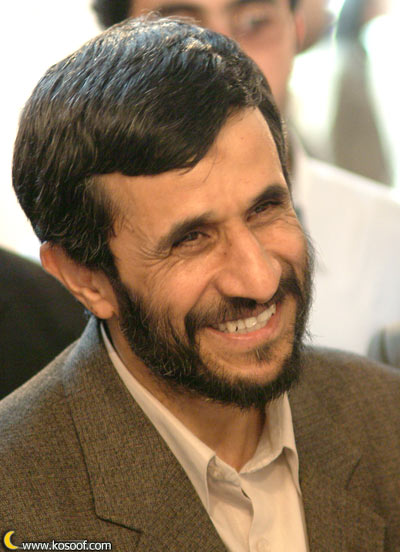
BBC remains my preferred news source because of its analysis and unbiased presentation of important international news. Case in point…quotes from both Iranian and Middle Eastern newspapers were collected by BBC and offer a broader perspective on the circumstances and the global implications of the release.
After some searching, I did find some substantive engagements in the crisis and its implications in the American media. I disagree somewhat with Slate’s view of the crisis as a total Tony Blair/ British failure. Clearly the situation had an international impact and using Blair or the British government as a scapegoat is ignorant.
The Moderate Voice is entertaining on the matter, but not necessarily analytical.
I greatly appreciated Charles Krauthammer’s op-ed in the Washington Post which explored other institutional failures. He was disappointed in the failure of the European Union, who prefers soft power diplomacy to “the brute military force those Neanderthal Americans resort to all the time” as well as the United Nations.
It is very evident that Ahmadenijad attempted to use the hostages as political leverage. Specifically coining the release “a gift to the British people,” and awarding the Iranian Revolutionary Guard members who captured the British naval men. The moderate Iranian news, Kargozaran, states, “Iran’s withdrawal of all its legal demands has surprised the people because we did not see any obvious flexibility from the UK.” Reformist news, Aftab-E Yazd, said, “The release of the British sailors just a day after Tony Blair’s empty threat did not arouse any sense of pride among Iranians but possibly even a sort of repulsion.”
As news of Iranian soldiers in Iraq being released and the treatment of the British sailors are uncovered, this issue is not over and done with. I’m looking forward to finding more pieces of the puzzle and hopefully uncovering support for my belief that the crisis was not a complete Iranian victory.
Thursday, April 5, 2007
Gingrich Video
Thank you Huffington Post, for the nice piece about Gingrich's "ghetto fab" slip up and the ever-so-entertaining Spanish apology on You Tube.
Wednesday, April 4, 2007
Gingrich Eats His Words (and Presidential Nomination)
Funny of the Day: White, rich Republican candidate apologizing for using "ghetto" to describe low income, uneducated, non-English language. In a speech denouncing bilingual education, Gingrich supported teaching English, "the language of prosperity," and hoped to get rid of "the language of the ghetto" in American schools.
I'm trying to find a video online of his apology in......oh dear God.....Spanish......
I'm trying to find a video online of his apology in......oh dear God.....Spanish......
Tuesday, April 3, 2007
Humans are Just Naturally Evil Assholes...
I remember hearing about Dr. Philip G. Zimbardo's controversial but extremely enlightening prison experiements at Stanford that had to end early because of the psychological damage inflicted on subjects. Now he's written a book discussing his experiment and comparing results to the atrocities of Abu Ghraib prison at the hands of US military. The New York Times sits down the the psychology professor to discuss his new book and his ideas on the myth of inherently good human beings.
Sunday, April 1, 2007
Expanding the US Missile Defense System: A Little More Skywalker, A Little Less Solo
Apparently Star Wars groupies in
The world is different than it was when “Star Wars,” the movie and the missile defense system were introduced.
Point in case:
Although stemming from what is post-Cold War paranoia,
Meanwhile, in
And the
What is most disturbing is O’Reilly’s attempts to use fear as leverage for the system expansion. “Twenty years ago eight countries had ballistic missiles. Today 24 have them and we are very concerned that that number continues to grow,” O’Reilly said, going on to cite
You would think the MDA would get a clue judging by the response it is receiving in
The truth is the
The consequences of expanding the “Star Wars” system promote deeper Russian skepticism and destabilize a fragile European Union expansion. Doing so will illustrate a flagrant disregard for international wishes on the part of the
If the
In summary, the United States has got to be a little more Luke Skywalker- positive and influential- and a little less Han Solo- heroic but reckless.
Subscribe to:
Posts (Atom)
